
A Simple Water-Reading Log: TDS, EC and Temperature
October 25, 2026 · 4 min read · printable
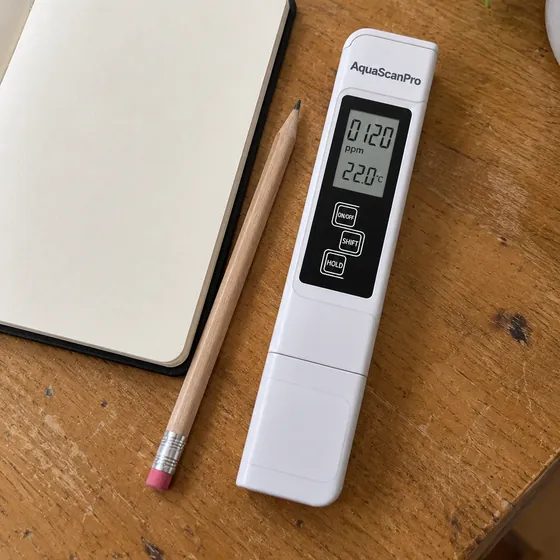
This guide is a recording worksheet. It isn't a water-safety test, and it doesn't replace the instruction manual that comes with your pen. Its job is simple: help you take each reading the same way, and write it down with the details that make it comparable later.
Before you measure
- Read the manual first for setup, immersion limit, cleaning and calibration. Check which units the pen is set to before you compare numbers.
- Use a clean, separate glass for the sample. Don't measure straight from the tap stream or inside a jug you drink from.
- Remove the protective cap and set it on the counter. Dip only the sensing end, within the manual's limit. Keep the body, buttons and battery compartment dry.
- Let the reading settle as the manual describes, then press HOLD so the number stays on screen while you write it down.
- Rinse, dry and cap the pen as the manual describes. Don't assume it's waterproof or dishwasher-safe.
What to write down every time
A number on its own is easy to misread later. Record these together:
- Date and time
- Sample or source (for example "kitchen tap", "RO faucet", "filter jug")
- TDS in ppm, or EC in µS/cm, and which one you used
- Temperature, with °C or °F
- Conditions: how long the tap ran, whether the filter was just changed, anything unusual
Log template
Print this page, or copy the columns into a notebook.
| Date / time | Sample / source | TDS (ppm) | EC (µS/cm) | Temp (°C/°F) | Notes |
|---|---|---|---|---|---|
Use the same kind of glass and similar sample conditions when you compare readings. Record what your pen actually shows: the numbers in our product photos are illustrations, not expected results.
What the log doesn't tell you
TDS and EC readings don't identify individual contaminants. Neither a low number nor a change in the number confirms that water is safe, that every contaminant has been removed, or that a filter does or doesn't need replacing. Follow your filter manufacturer's maintenance schedule and local water advisories. For specific contamination concerns, use appropriate laboratory testing rather than this pen alone.
This guide doesn't promise a precision, calibration standard, response time, battery type or safe operating temperature. Check those details in the manual that comes with your pen.