
Comparing tap and RO readings without over-reading them
October 25, 2026 · 3 min read
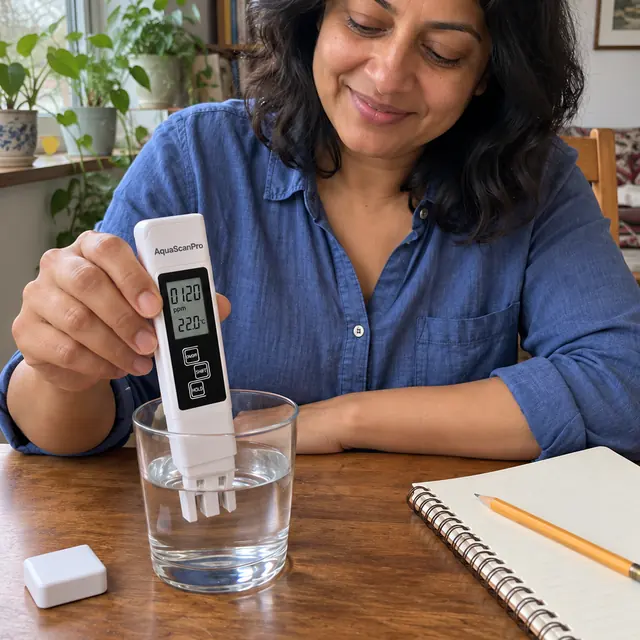
One of the most common reasons people buy a TDS pen is to compare water before and after a filter, such as tap water and the faucet of a reverse-osmosis (RO) system. Here's how to make that comparison consistent, and how to read it calmly.
Make the two samples comparable
- Use two clean glasses of the same kind, one for each source.
- Run each tap the same way, for example for the same number of seconds, so you're not comparing water that sat in the pipe with fresh water.
- Let both samples sit for a moment so they're close in temperature, or at least note the temperature of each.
- Use the same mode and units for both readings. Rinse and dry the sensing end between samples as the manual describes.
- Write both down together: date, source, reading, units, temperature and any notes, such as "filter changed last week".
What a difference means
RO systems are designed to reduce dissolved solids, so the RO sample usually reads lower than the tap. Seeing that difference tells you the two samples conduct electricity differently. It doesn't tell you which contaminants were removed, or that the RO water is safe.
What a change over time means
If the gap between tap and RO readings narrows over weeks, that's something to note in your log and compare with your RO manufacturer's guidance. The pen alone can't tell you when to replace a filter or membrane: follow the manufacturer's maintenance schedule.
Keep it in context
A reading log is a record, not a verdict. For specific concerns about your water, follow local advisories and use appropriate laboratory testing.